Pragmatic Heat Resilience - Protecting Lives and Changing Systems
As dangerous heat settles into the Northeast, the project I just wrapped up with a small, rural town in Western Massachusetts reinforced for me the need to approach heat resilience from two perspectives - individual action and collective action. Adaptation practitioners often approach heat resilience from the collective action perspective - how can communities, governments, organizations change built and natural infrastructure to promote cooling and reduce heat island effects? We plan and design cooling centers or resilience hubs, planting plans to improve canopy/shade, removal of pavement and addition of greenspace, swapping new green infrastructure for old grey infrastructure, shade structure installation, and accessible water (cooling) features.
Those are all valuable adaptation measures, but for the most part they require resources and time, especially as we try to scale them from sites to neighborhoods or entire municipalities. In addition, solutions that work in dense urban heat islands, may not be feasible in rural areas. Many communities, like the one I was working with, are resource-limited and rely almost solely on grants to implement adaptation measures, and as a heat dome closes over New England, we know that the time for adaptation is now. This summer's third and hottest heatwave in Massachusetts is a reminder of the breadth and impact of extreme heat.
The Limits of a "Build it and They Will Come" Approach
This summer two experiences refocused my attention on the individual action piece. The first was the results of a survey targeted at older adults in that small town in Western Massachusetts. The results of a survey conducted with the support of the local council on aging revealed that the survey participants, who were almost exclusively over 65 and mostly in their 70s, preferred to stay home during heat events. In this rural community, few had ever used a cooling center and some didn't know where one was located near them. Concerns about leaving pets and the cost of energy to run air conditioning were also mentioned.
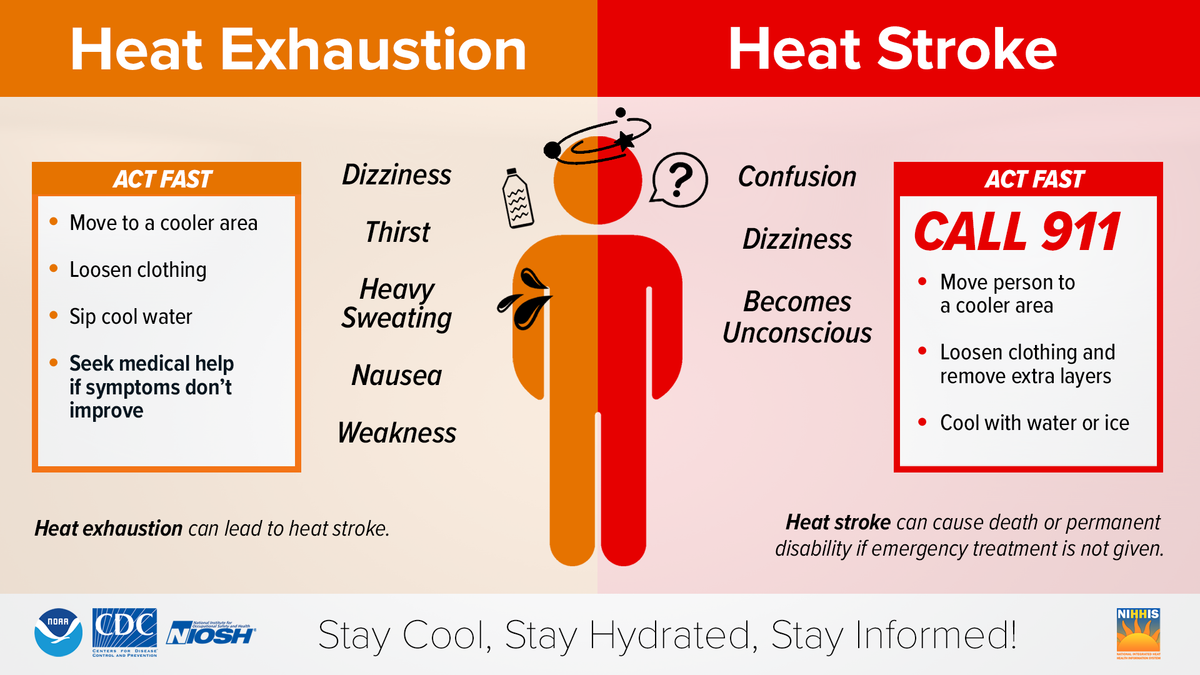
The second experience was closer to home, when a 77-year old family member went to the emergency department of a local hospital with symptoms of heat exhaustion. He lives in a home with air conditioning and was using it during that 83-degree Fahrenheit day, but had been outside for several hours. He had the resources to stay cool, but lacked the awareness around how to prevent heat-related illness (HRI) by taking breaks in the shade or indoors and staying hydrated. Then neither him nor his spouse recognized that it was HRI when he experienced symptoms, especially when they occurred after he was already back inside.
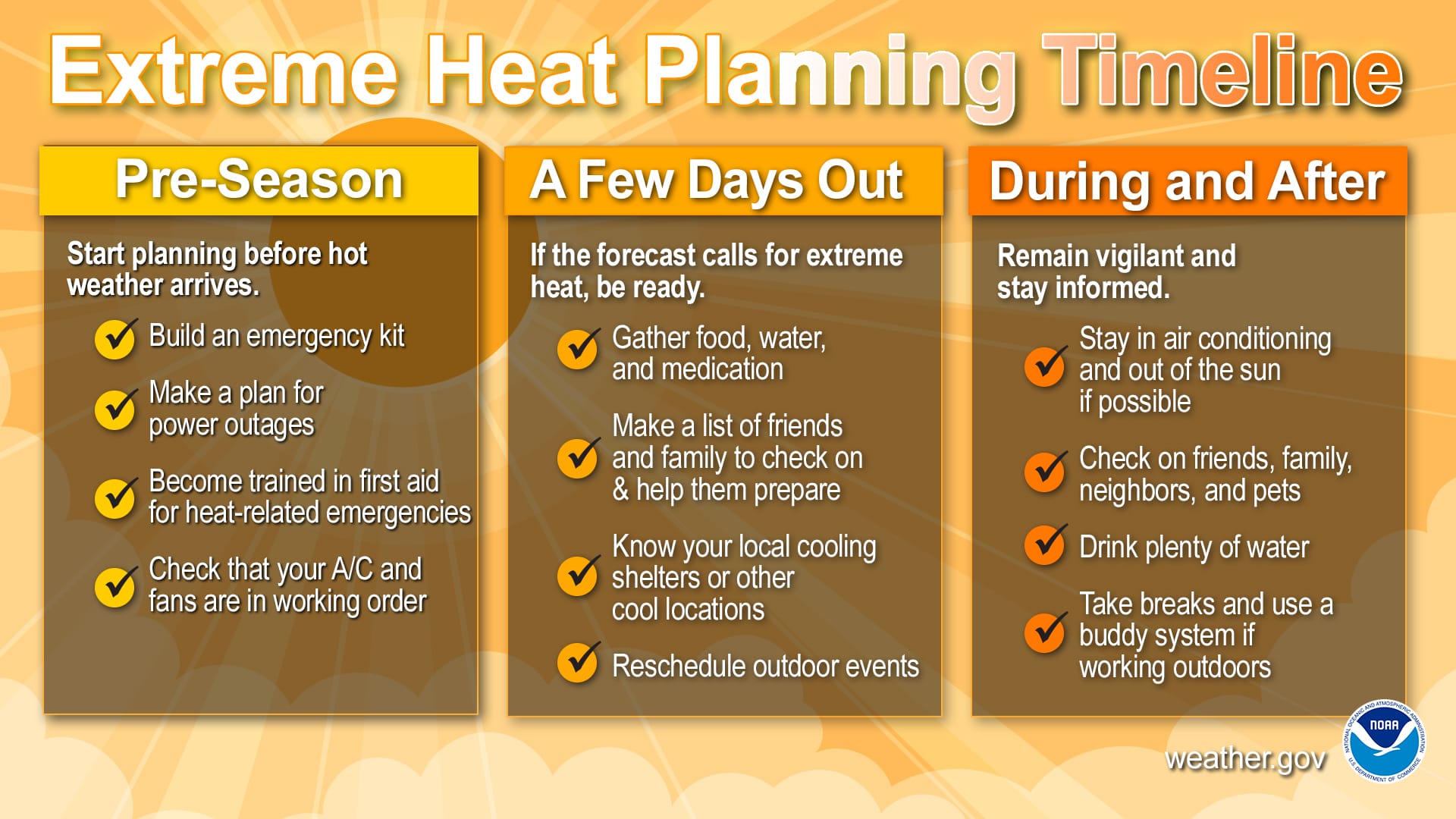
These experiences highlighted the individual action piece of heat resilience. In the case of my family member, there is an abundance of information to share with him. Basic guidance on recognizing and preventing HRI is available from federal and state government agencies and many organizations like Red Cross and Americares - see a collection of my favorites below. And because he has chronic health conditions, Americares' Heat Action Plan and Tip Sheet is something he can use to guide conversations with his doctor about how his heat vulnerability might be increased and what he should specifically do to stay safe when temperatures climb into the 80s and beyond.
Resources for the Realities of In-Home Heat
But what about those that don't want to, or can't, leave their homes during extreme heat? And what if they don't have air conditioning or can't afford to use it?
This group is easily left behind. In places like New England, our systems are historically designed to protect people from extreme cold and winter weather, not to serve as heat-ready communities. This year some practical resources have emerged to fill the gap.
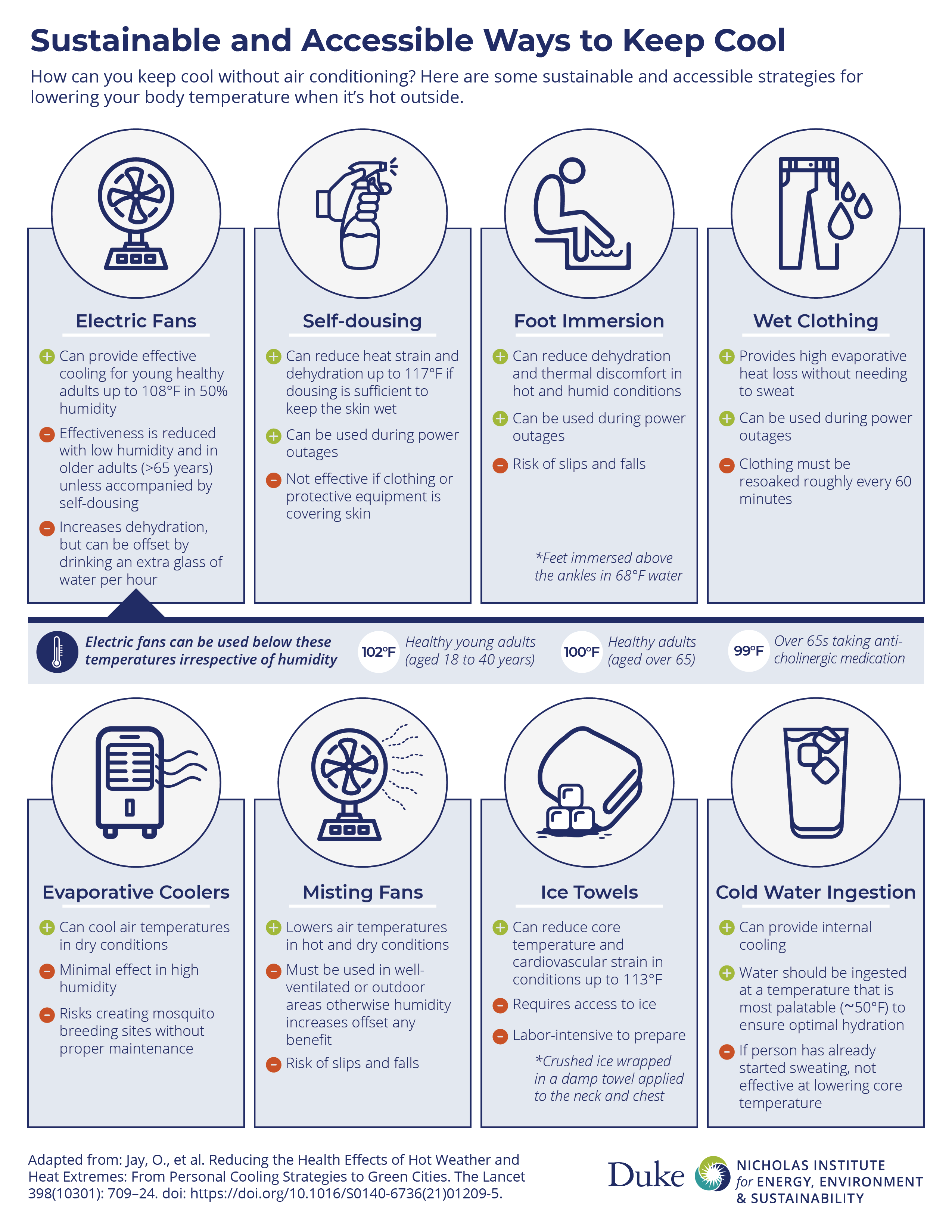
The Nicholas Institute for Energy, Environment & Sustainability at Duke University released a terrific example of this with their infographic Ways to Keep Cool Without Air Conditioning. Based on the paper by Jay et al. (2021) that appeared in The Lancet, the infographic outlines simple, low-cost, science-based cooling options like self-dosing, foot immersion, and ice towels.
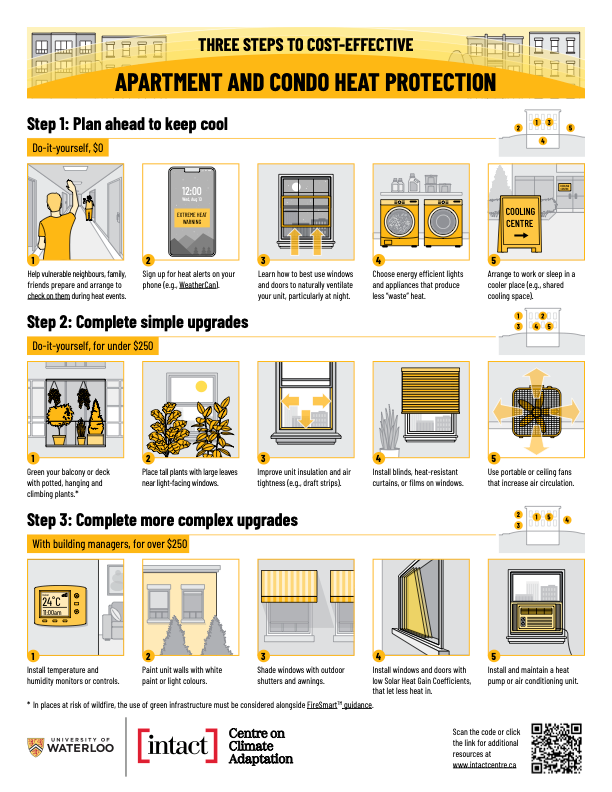
The infographics created by the Intact Centre on Climate Adaptation at the University of Waterloo provide a similar resource, but with a focus on adaptations for homes and apartments to provide extreme heat protection at home. They outline three steps, starting with no cost measures for planning for heat such as checking on neighbors and knowing where the closest cooling center is. The second step includes relatively low-cost DIY measures on the interior (e.g., adding shades) and exterior (e.g., adding greening). The third step would involve the use of a contractor and/or building manager and are more complex and costly (e.g., installing exterior shades and painting exteriors lighter colors).
Addressing the Now Without Losing Sight of the Next
Also, let's acknowledge that while there is the need to address thermal poverty (i.e., providing affordable access to cooling and heating) and to revisit building codes, there is an urgent need to provide practical, affordable tools in the present moment to those that don't have access to air conditioning for whatever reason. In the week ahead of the July 2-5 heat dome in the Northeast, the New York Times Wirecutter ran an article called "Extreme Heat Affects Everyone. This Gear Can Help Keep You Safe." After covering potential factors influencing heat vulnerability and steps to take to prepare for and endure an extreme heat event, the article provided reviews and links to cooling-related items (window air conditioners, fans, water bottles, etc.). A public health professional consulted for the article shared it on LinkedIn. One of the comments he received criticized the article as an example of maladaptation—the idea that a short-term fix actually increases long-term vulnerability (like running fossil-fueled ACs to escape fossil-fueled warming)—and said that people can't "buy their way out" of heat impacts. However, suggesting that purchasing a window air conditioning unit and using it if you live in a 3-story walk-up in Boston and the heat index is >100 is maladaptation is counterproductive if you are trying to engage people to support community resilience.
We have to both look to the longer term solutions and keep people safe and healthy in the short-term. Explaining that there are more sustainable long-term solutions to improve heat resilience that they should advocate for in their community, as well as some individual actions they could take to stay cool and safe while reducing their AC use is an approach that acknowledges the reality of the situation, addresses immediate health and safety concerns, and points to a way forward. As practitioners, we need to do all of those things.
Useful Infographics for HRI Awareness
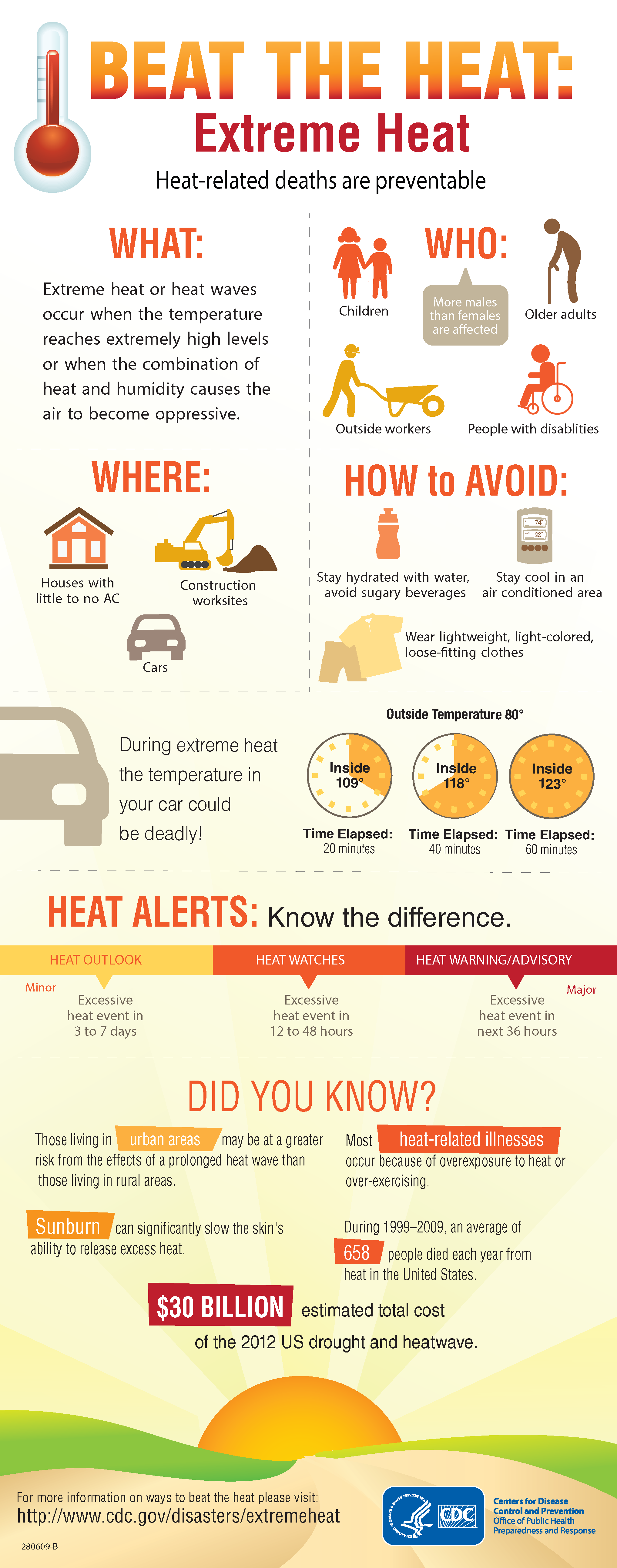
https://www.cdc.gov/extreme-heat/media/pdf/beat-the-heat-2017.pdf.pdf
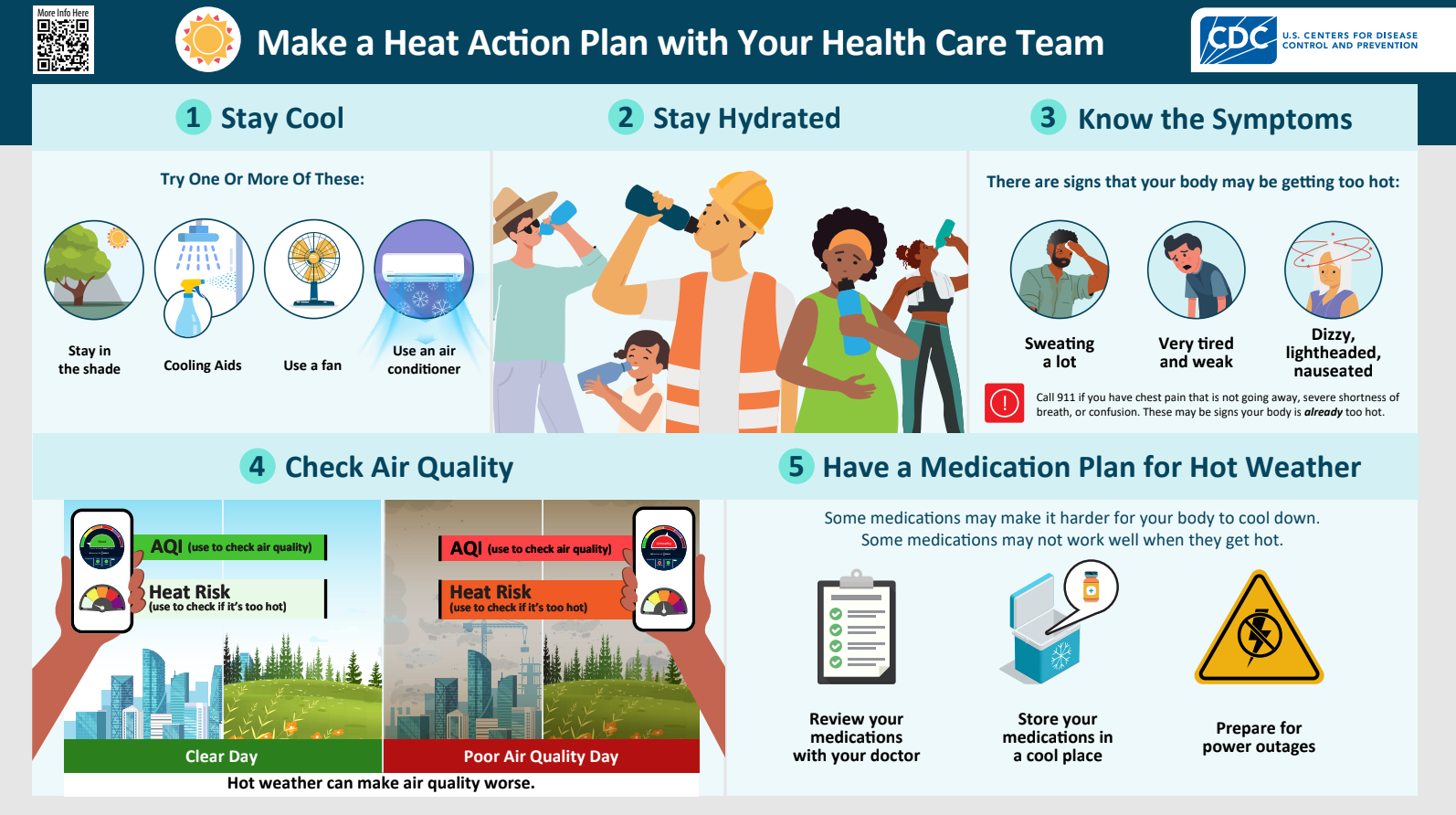
https://www.cdc.gov/heat-health/media/pdfs/Heat-and-Health-Guidance-Infographic-508.pdf