New US Census Tool - Local Air Conditioning Estimates

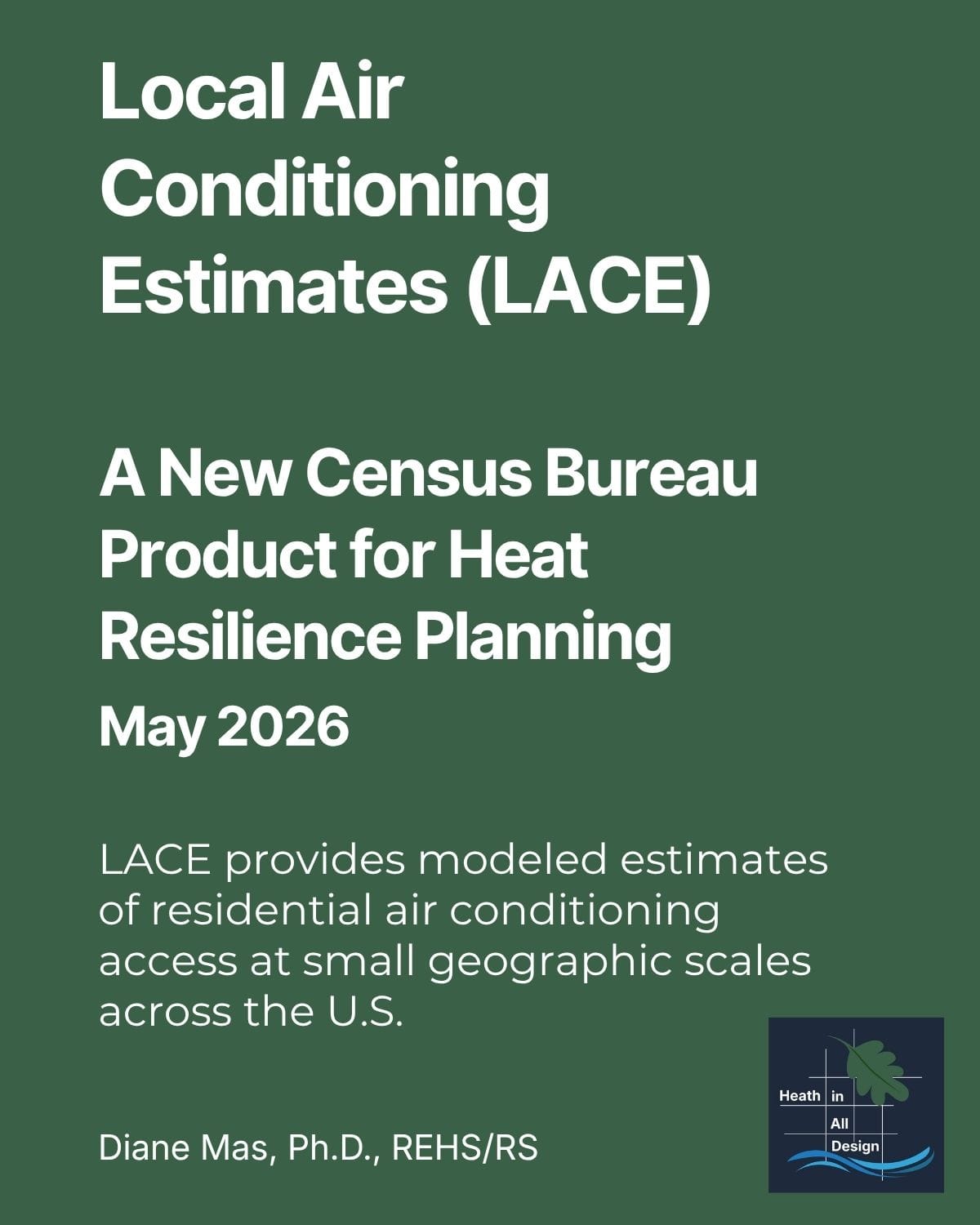
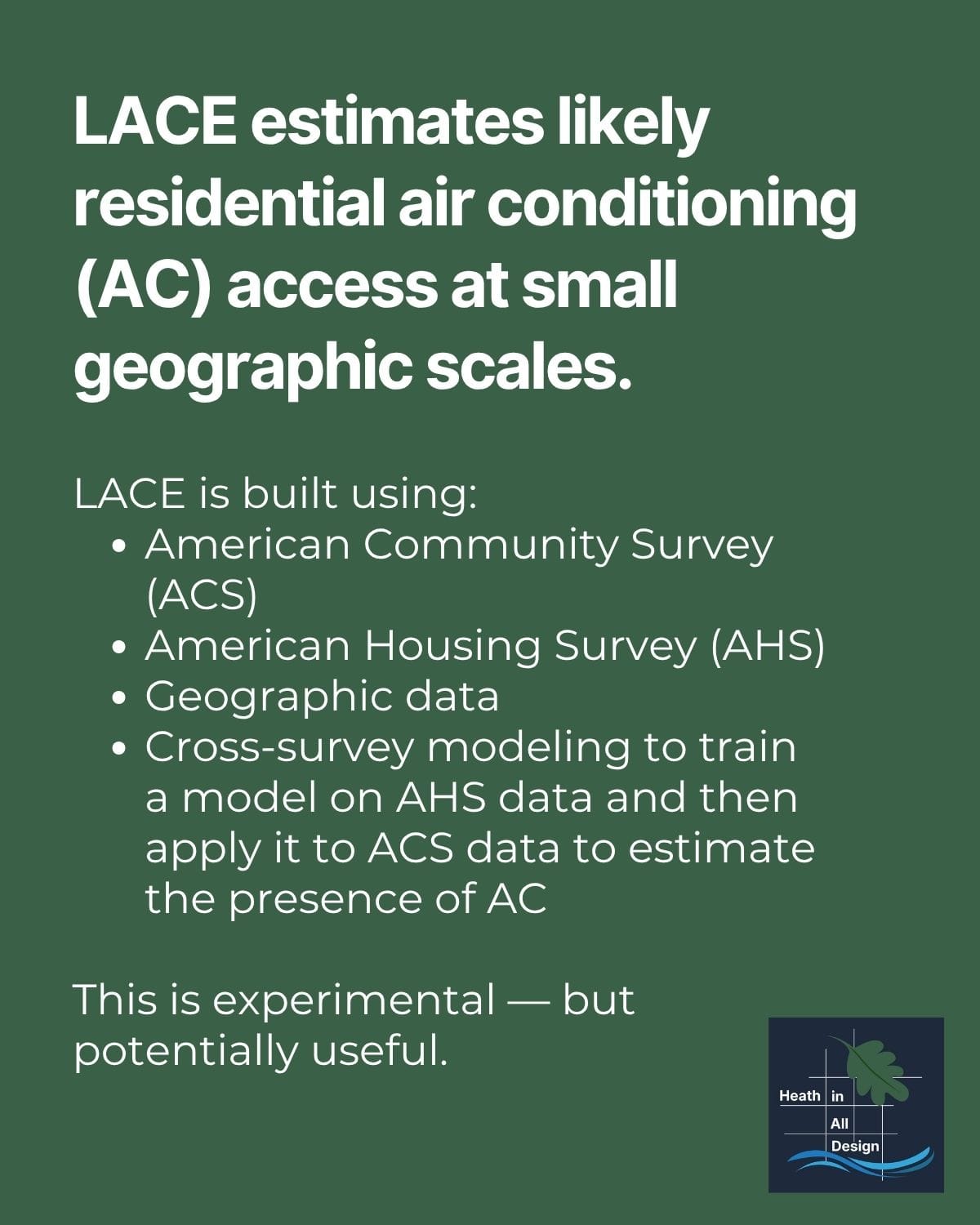
During the 2026 National Heat Safety Awareness Week, the Census Bureau released a new experimental product estimating likely residential air conditioning access. The data set called Local Air Conditioning Estimates (LACE) combines data from the American Housing Survey, the American Community Survey, along with geographic data including Wet Bulb Globe Temperature, climate zone, average electricity cost at the state level, percentage rural within the county, and whether or not the location is in a coastal county to provide "national, state, county, and census tract level estimates of the number and percent of occupied housing units that have an air conditioning unit." [1]
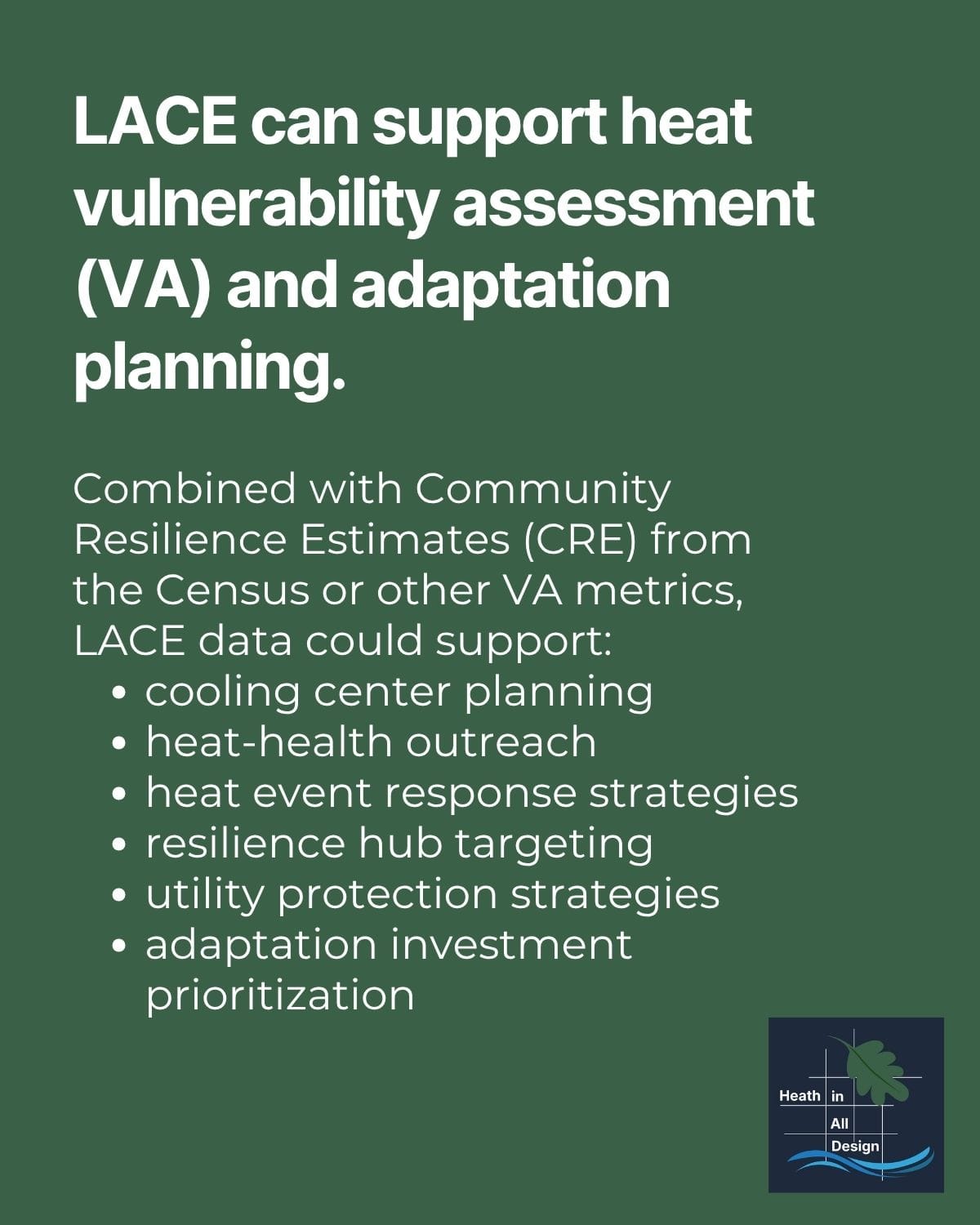
Of course, having an air conditioning unit doesn't automatically mean that the household is using the AC since cost may be a barrier. However, it does indicate the possibility of access to AC in the home, an important adaptive capacity. As a result, LACE has the potential to support heat resilience planning and implementation because it enables estimates of adaptive capacity at the local scale. By modeling likely residential air conditioning access, one can imaging it being used to help identify communities where extreme heat impacts may be amplified by housing conditions, energy burden, aging infrastructure, and socioeconomic vulnerability. Combined with other data like the Census Community Resilience Estimates (CRE), state urban heat island data, or local, state, and national public health indicators, information obtained from LACE could support resilience efforts across a range of actions such as: targeted cooling center placement, heat-health outreach, housing retrofit prioritization, resilience hub siting, and first responder and healthcare surge planning.
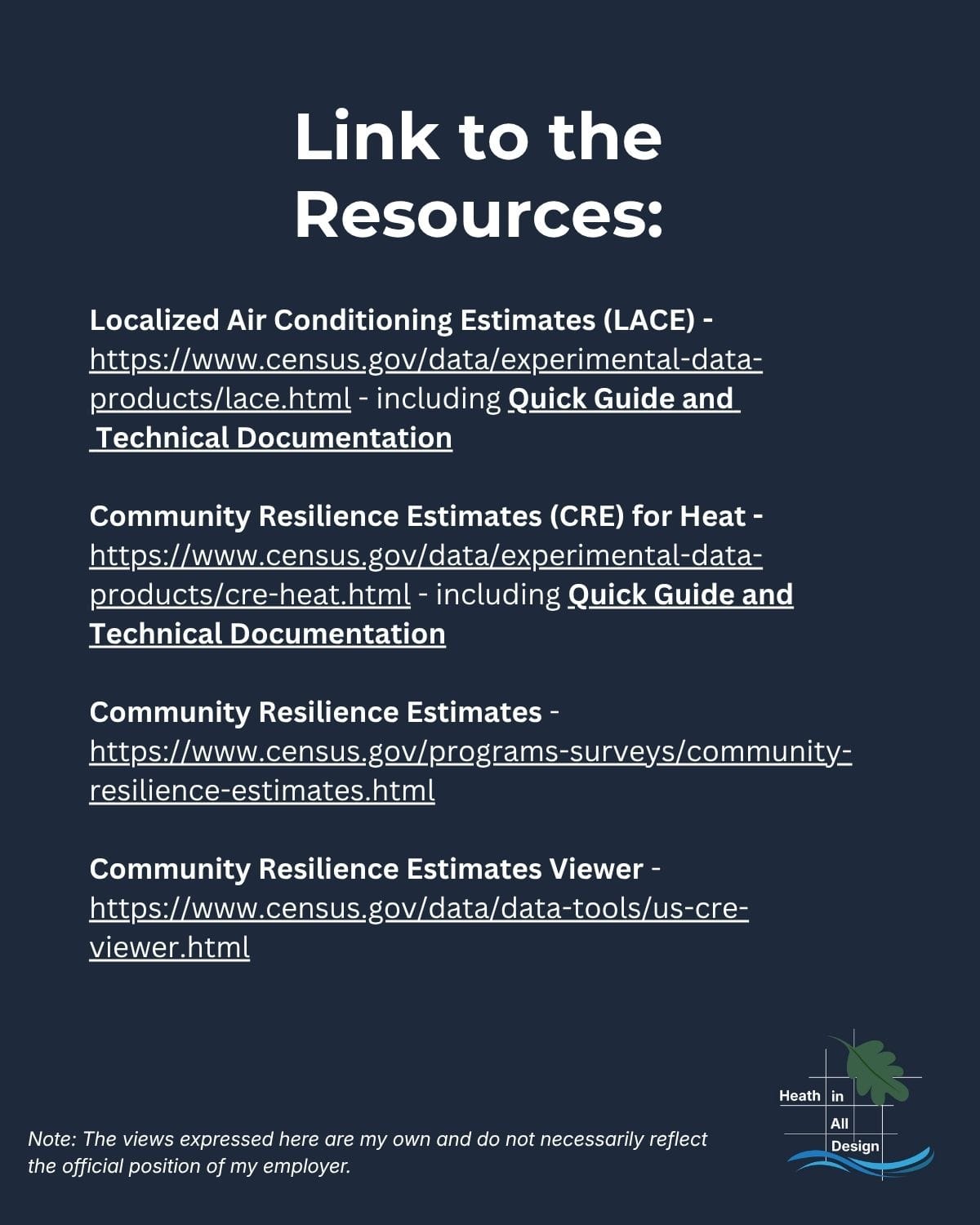
More on LACE and links to the other Community Resilience Estimate tools from the Census are below.
Sources
- https://www2.census.gov/programs-surveys/demo/technical-documentation/lace/2023-LACE-Quick-Guide.pdf
Note: The views expressed on Health in All Design are my own and do not necessarily reflect the official position of my employer.